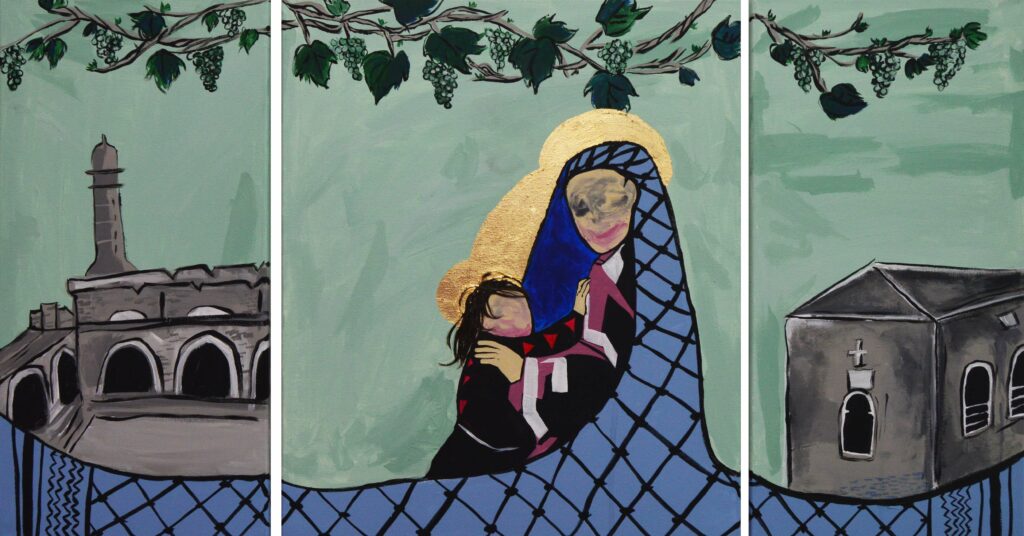
In three decades, the United States will have a “majority-minority” population. We asked four artists to consider this demographic shift. Here is Oyama Enrico Isamu Letter, an abstract artist and painter who draws on the visual elements of graffiti culture.
“I suddenly noticed an odor in the air. It was sweet and persistent but not at all unpleasant. I took a deep breath and let myself be guided by the smell.”
“Nut was hungry. Nut had to move.” Originally self-published in 1935, this hallucinatory, quasi-experimental novel follows the peripatetic musings of a young man throughout a single day in Depression-era New York.
Easy Rider and recently deceased Dennis Hopper apparently had a collection of “Chinese” warrior prints that went up for bidding. Except that the warrior is not Chinese… or a warrior…
Scholar Vivek Bald chronicles an early lost history of a time of Black-Bengali racial solidarity
Ocean Vuong, in search of the “new erotic,” guest-curates a portfolio of poems in time for Valentine’s Day.
Link-bait for the Monday-challenged.
Carolyn Sun explores the journey of how kimchi has found its place in America at the tables of Koreans and non-Koreans alike.
Link bait for hump day.
In three decades, the United States will have a “majority-minority” population. We asked four artists to consider this demographic shift. Sharing his vision of 2050 is Jeff Ng, a designer better known as jeffstaple and the founder of Staple Design.
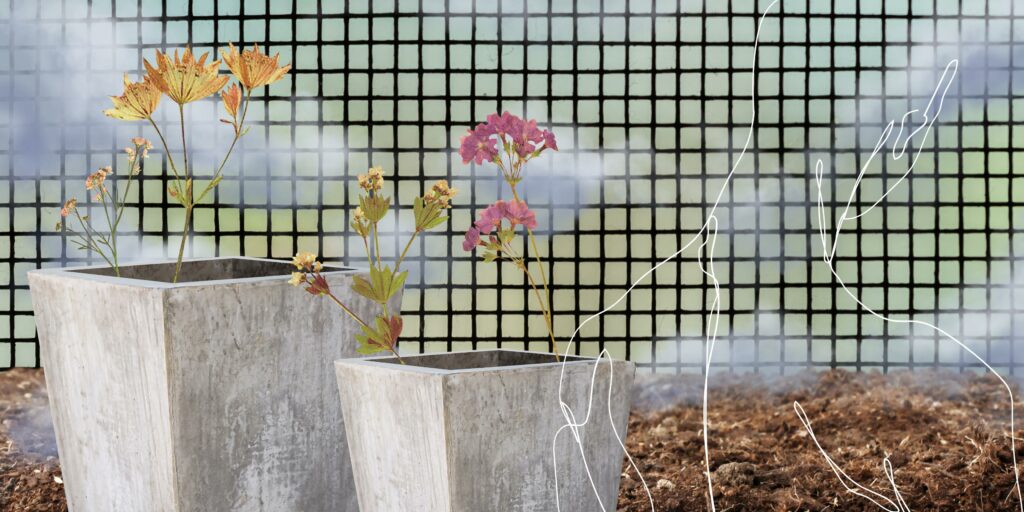
In three decades, the United States will have a “majority-minority” population. We asked four artists to consider this demographic shift. Here is Jaret Vadera, an interdisciplinary artist based in New York and interested in the hidden structures of power.
Baohaus bad boy and Workshop board member Eddie Huang reads from his new memoir tonight. Where will you be?
Link bait for the Monday-challenged.
In an excerpt from a forthcoming book, English professor Min Song reflects on undergraduate “Great Books” courses, the Helen Vendler-Rita Dove debate, and the first time he read a Siu Sin Far story.
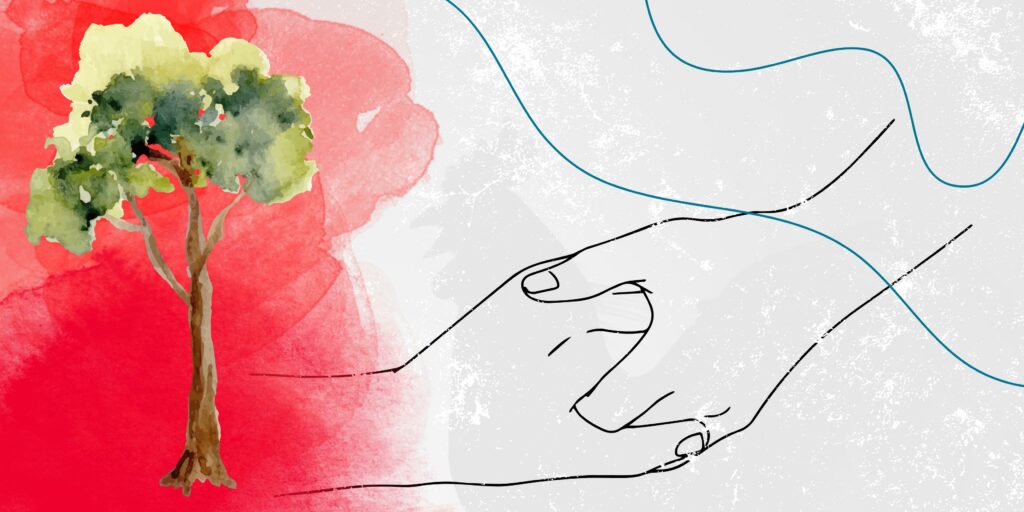
In three decades, the United States will have a “majority-minority” population. We asked four artists to consider this demographic shift. First up is An Xiao Mina, a designer and artist who focuses on the role of technology in building communities.
An interview with journalist Hsiao-Hung Pai, whose book Scattered Sand tells the stories of Chinese migrant workers—direct from their mouths.
The two comics chat with fellow comedian Jen Kwok about emergency generators, censorship, and the most-viewed YouTube video in Pakistan.
Originally published in Japanese in 1925, this naturalist noir masterpiece follows itinerant day laborer Ishikawa Sazuko as he prowls the back alleys of Los Angeles, looking for a meal, a job, or just some companionship. With an introduction by translator Andrew Leong.
“I have a mole on the bottom of my foot, and some of my more superstitious relatives told me that if you have a mole on the sole of one foot, you’ll always yearn to visit new places more than most.”
“Stay with the music, that’s all it’s about anyways.” A night with legendary Chinese jazz pianist Xia Jia.
Orhan Pamuk and Mo Yan, Noble Prize winners in Literature, were both writers-in-residence at the prestigious International Writing Program. An interview with IWP’s current director about one of the program’s founders, the remarkable Chinese novelist Hualing Nieh.
“I want a literature that is not made from literature.”
It’s the year 2352, and the Walrusoids are at it again, speculating over divorce, SB 1070, some tall Asian guy named Jeremy Lin, and movie theater masturbation.
Fellow sci-fi writer Vandana Singh quizzes the award-winning, short-fiction master on his axiomatic approaches, paradigm shifts, and whether he would ever own a digient.
“Our Mordor was the same. Our Frankenstein was the same. Our Tinker Bell was the same. We didn’t have to imagine Davy Jones—a graphics company in Silicon Valley was manufacturing him for us. We all picked our visuals from the universal pool. The individual monster was dead.”
An alarming new documentary blames China for America’s woes.
“I absolutely did not set out to write a lesbian Cinderella. It wasn’t the story I intended to tell, so it took me a while to come around to the idea of telling it.”
The journalist and debut fiction writer chats with fellow Grantland writer Hua Hsu about his new neo-noir novel, grading papers, and Duck Down videos.
Qiu Miaojin—one of the first openly lesbian writers in ’90s post-martial-law Taiwan—committed suicide at the age of 26. What follows is an excerpt from her “survival manual” for a younger generation. With an introduction by translator Bonnie Huie.
In Athens, an historic square and neighborhood now home to porno theaters, sex stores, and “café” brothels, is alive with immigrants—until it isn’t.
Our mystery veteran agents answer your questions about the book industry.
Searching for something that you can’t encounter on a college walk? Apply to be a fall intern at the Asian American Writers’ Workshop.
A new documentary about the famed Chinese artist and dissident focuses on his activism more than it does his art.
Drum roll, please. The results of our “Gao Kao” contest, co-hosted by Wall Street Journal “Tao Jones” columnist Jeff Yang, are in.
“Only when the Imperial Wang—or as they say in English, “The Wang of Wangs,” is shoved directly in the face of the public, will the Emperor’s potency be fully apparent.”
“Fry these days! Maybe he had been exposed to too many pesticides as an egg.”
Various communications methods are being developed: email, SMS, etc. Do you think the letter is replaceable?
“Assume the fish are swimming in clean, pollution-free water. Assume any cloudiness to be a consequence of naturally occurring solvents or debris.”
“They say to write something new you’ve got to be lost.” An excerpted video conversation featuring the Pulitzer Prize winner and the author of Free Food for Millionaires.
In the first installment of his interview column, “The Cornering,” Ashok Kondabolu of Das Racist chats it up with Comedy Central comedian Sheng Wang. They also traipse the streets of Chinatown. Look out for part deux of this interview next week.
The Tokyo New Wave actress featured brilliantly in films by Ozu, Mizoguchi, and Kurosawa.
A round-up of articles, interviews and videos featuring Salgado, who was recently among the first undocumented immigrants to be featured on the cover of TIME magazine. The artist and activist will be screenprinting at AAWW’s launch party tonight.
A former Rockstar Games developer’s new project about the Iranian Revolution has gotten him labeled a spy.
Compared to China’s national university entrance exam, the gaokao (lit., “test you must ace or work as a menial laborer for the rest of your life”), the SATs are a stroll in the park.
The inaugural installment of our publishing advice column. Send our Agony Agents your most pressing book industry questions!
The acclaimed Thai filmmaker sits down with novelist Katie Kitamura for a conversation about narrative vs. storytelling, black magic, and migrant populations.
Spy novels as Asian kitsch.
A love letter to the magazine that defined a generation.
The author of The Collective chats with AAWW executive director Ken Chen about windsurfing, his writing chair, and the best way to eat eggs.
The British desi band’s kitschy, three-chord hit appeared on episodes of Friends and in a Gap commercial.
On rural Chinese costume jewelry, and eerily quiet portraits.
The ‘90s saw Western designers outsourcing not just manufacturing, but inspiration, to Asia.
Author, professor, and provocateur Amitava Kumar has a very specific question for New York City book clerks.
Delhi-based reggae MC Taru Dalmia travels to villages in India to record songs that speak truth to power.
The singer stars in Coldplay’s perplexing (and embarrassing) “Princess of China” music video.
In Japan, stationery magazines repopulate like bunnies.