
In his musical operatic tribute to the former first lady of the Philippines, David Byrne leans on pop psychology to tell the story of the “steel butterfly.”
“It’s a little terrifying to be so influential. By which I mean, it’s really moving to have these wonderful writers come and share my work with all of you.”
Lesser known facts about the celebrated author—from his days sweating ad copy to his latest gig as a television screenwriter
Ashok Kondabolu of Das Racist catches up with documentary photographer Annie Ling at her Brooklyn apartment.
In three decades, the United States will have a “majority-minority” population. We asked four artists to consider this demographic shift. Here is Oyama Enrico Isamu Letter, an abstract artist and painter who draws on the visual elements of graffiti culture.
“I suddenly noticed an odor in the air. It was sweet and persistent but not at all unpleasant. I took a deep breath and let myself be guided by the smell.”
“Nut was hungry. Nut had to move.” Originally self-published in 1935, this hallucinatory, quasi-experimental novel follows the peripatetic musings of a young man throughout a single day in Depression-era New York.
Scholar Vivek Bald chronicles an early lost history of a time of Black-Bengali racial solidarity
Ocean Vuong, in search of the “new erotic,” guest-curates a portfolio of poems in time for Valentine’s Day.
“I logged onto the Internet and searched for others like me. I never found them, but I invited them over to my hotel room anyway.”
“The commodity aesthetic of cuteness, the discursive aesthetic of the interesting, and the performative aesthetic of zaniness help us get at some of the most important social dynamics underlying life in late capitalist society today.”
Carolyn Sun explores the journey of how kimchi has found its place in America at the tables of Koreans and non-Koreans alike.
Link bait for hump day.
In three decades, the United States will have a “majority-minority” population. We asked four artists to consider this demographic shift. Sharing his vision of 2050 is Jeff Ng, a designer better known as jeffstaple and the founder of Staple Design.
In three decades, the United States will have a “majority-minority” population. We asked four artists to consider this demographic shift. Here is Jaret Vadera, an interdisciplinary artist based in New York and interested in the hidden structures of power.
Baohaus bad boy and Workshop board member Eddie Huang reads from his new memoir tonight. Where will you be?
In an excerpt from a forthcoming book, English professor Min Song reflects on undergraduate “Great Books” courses, the Helen Vendler-Rita Dove debate, and the first time he read a Siu Sin Far story.
Cultural critic Rey Chow discusses her new book—including how the acclaimed Austrian filmmaker’s “staging of the extreme” gestures toward the pornographic.
In three decades, the United States will have a “majority-minority” population. We asked four artists to consider this demographic shift. First up is An Xiao Mina, a designer and artist who focuses on the role of technology in building communities.
An interview with journalist Hsiao-Hung Pai, whose book Scattered Sand tells the stories of Chinese migrant workers—direct from their mouths.
The two comics chat with fellow comedian Jen Kwok about emergency generators, censorship, and the most-viewed YouTube video in Pakistan.
Originally published in Japanese in 1925, this naturalist noir masterpiece follows itinerant day laborer Ishikawa Sazuko as he prowls the back alleys of Los Angeles, looking for a meal, a job, or just some companionship. With an introduction by translator Andrew Leong.
Emma Straub, author of Laura Lamont’s Life in Pictures, on why a feline companion might make you a better writer.
“I have a mole on the bottom of my foot, and some of my more superstitious relatives told me that if you have a mole on the sole of one foot, you’ll always yearn to visit new places more than most.”
Whiting Award-winner Alexander Chee on post-its, the virtues of retyping, and committing to the process.
Orhan Pamuk and Mo Yan, Noble Prize winners in Literature, were both writers-in-residence at the prestigious International Writing Program. An interview with IWP’s current director about one of the program’s founders, the remarkable Chinese novelist Hualing Nieh.
Following in the footsteps of Dorothea Lange, who photographed stoic, suffering faces during the Depression, the Chinese-born artist traveled across recession-worn America, capturing a different sort of face.
Buwei Yang Chao’s famed 1945 cookbook helped coined the phrase “stir-fry.” “Wrapling” and “rambling,” her words for the simple and ruffle-edged dumplings, were less successful.
“I want a literature that is not made from literature.”
Stereogum editor Amrit Singh has a hang with Das Racist hypeman Ashok Kondabolu. Proper nouns mentioned: George Washington, Britney Spears, Jenny Slate (a.k.a. the “Marcel the Shell” girl), and C. Mohan (Bollywood’s most iconic designer).
It’s the year 2352, and the Walrusoids are at it again, speculating over divorce, SB 1070, some tall Asian guy named Jeremy Lin, and movie theater masturbation.
Fellow sci-fi writer Vandana Singh quizzes the award-winning, short-fiction master on his axiomatic approaches, paradigm shifts, and whether he would ever own a digient.
“Our Mordor was the same. Our Frankenstein was the same. Our Tinker Bell was the same. We didn’t have to imagine Davy Jones—a graphics company in Silicon Valley was manufacturing him for us. We all picked our visuals from the universal pool. The individual monster was dead.”
In an interview about his new book, State Out of the Union, author Jeff Biggers examines Arizona, the so-called “meth lab of democracy,” and the rogue state’s cycles of repression and resistance.
“The first real song I wrote was a book report for Lord of the Flies.”
“I absolutely did not set out to write a lesbian Cinderella. It wasn’t the story I intended to tell, so it took me a while to come around to the idea of telling it.”
The journalist and debut fiction writer chats with fellow Grantland writer Hua Hsu about his new neo-noir novel, grading papers, and Duck Down videos.
Ashok Kondabolu of Das Racist interviews Anil Dash, the blogger and technologist, at Financier Patisserie, near Astor Place.
Qiu Miaojin—one of the first openly lesbian writers in ’90s post-martial-law Taiwan—committed suicide at the age of 26. What follows is an excerpt from her “survival manual” for a younger generation. With an introduction by translator Bonnie Huie.
In Athens, an historic square and neighborhood now home to porno theaters, sex stores, and “café” brothels, is alive with immigrants—until it isn’t.
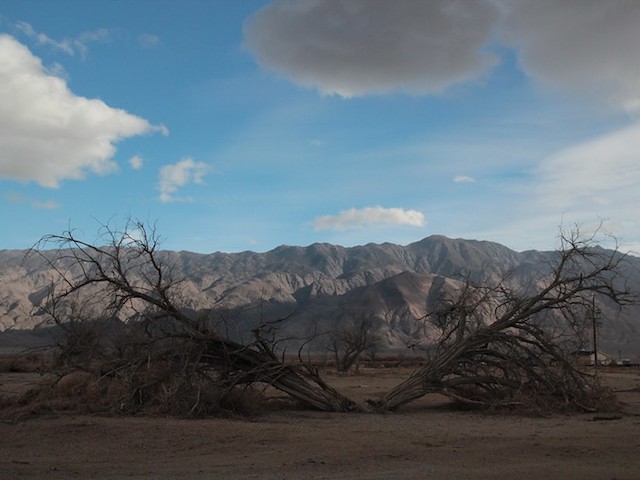
At the Japanese American internment camp site, an art exhibit featuring photographs of Muslims has been the subject of complaints.
The veteran comedian, actor and director was the epitome of Hong Kong’s ’90s-era mo lei tau subculture.
Our mystery veteran agents answer your questions about the book industry.
Poet and journalist Luis H. Francia journeys through Japan, bearing witness to the devastation wrought by the 2011 earthquake and tsunami—and to the creativity arising from these very areas.
Diver Vicki Manalo Draves won two gold medals in rations-enforced London. To celebrate, she ate horse.
Kitamura chats with Hermione Hoby about her new novel, a “collage of colonialism.”
Matthew Salesses on the power of words and appearances.
How did a multinational corporation like Nike appeal to diverse markets without violating the principle of colorblindness that became increasingly and insidiously sacrosanct in the U.S. in the 1990s? A deconstruction of two infamous Tiger Woods ads sheds some light.
How do you get from Cindy Sherman, to Nikki S. Lee, and back?
Searching for something that you can’t encounter on a college walk? Apply to be a fall intern at the Asian American Writers’ Workshop.
The Leche author’s first novel—set in Hawaii and replete with lush pop-cultural references—can be read as a postmodern YA gem.
A new documentary about the famed Chinese artist and dissident focuses on his activism more than it does his art.
“Only when the Imperial Wang—or as they say in English, “The Wang of Wangs,” is shoved directly in the face of the public, will the Emperor’s potency be fully apparent.”
“Fry these days! Maybe he had been exposed to too many pesticides as an egg.”
Various communications methods are being developed: email, SMS, etc. Do you think the letter is replaceable?
“Assume the fish are swimming in clean, pollution-free water. Assume any cloudiness to be a consequence of naturally occurring solvents or debris.”
“They say to write something new you’ve got to be lost.” An excerpted video conversation featuring the Pulitzer Prize winner and the author of Free Food for Millionaires.
Part two of an epic conversation between Ashok Kondabolu of Das Racist and Comedy Central comedian Sheng Wang.
Can a movie that explicitly demonstrates the darkest grotesqueries of pornography actually function as a refusal to condemn it? Tsai Ming-Liang’s The Wayward Cloud hints at this possibility.
“Pacquiao became the second man in boxing history to win world titles in six different weight divisions. There he was: our uncle, our Tito, our brother, our kuya.”
“Since their submission was purely auditory, no one at Sprite realized they were Asian American.”
“My father’s warehouse was close to the decayed parts of the harbor, which rambled on into the slums built by smugglers and sailors.”
Former Marine mess cook John Gun Pin knew how to handle a cleaver. Harley Spiller (a.k.a. Inspector Collector) remembers his old friend, and the last dish he prepared: cured crab, or ha cha.
In the first installment of his interview column, “The Cornering,” Ashok Kondabolu of Das Racist chats it up with Comedy Central comedian Sheng Wang. They also traipse the streets of Chinatown. Look out for part deux of this interview next week.
Ying Li talks to her novelist mother, Lin Chang, about the first Chinese-language TV show to be shot in the United States.
A new Twitter feed goes after those who commit the common crime of misspelling Mahatma Gandhi’s last name.
Over the course of the ’90s, Filipino American scratch crews transformed the realm of hip-hop DJing.
On the domestic terror of the 1990s, and avoiding cultural amnesia.
The transnational writer dishes about Law and Order, her favorite drinks, and less-than-romantic writing habits.
A round-up of articles, interviews and videos featuring Salgado, who was recently among the first undocumented immigrants to be featured on the cover of TIME magazine. The artist and activist will be screenprinting at AAWW’s launch party tonight.
The leaked playlist for the London Olympics opening ceremony is almost absurdly eclectic, and includes the bhangra track, “Nachna Onda Nei.”
Compared to China’s national university entrance exam, the gaokao (lit., “test you must ace or work as a menial laborer for the rest of your life”), the SATs are a stroll in the park.
Karen Tei Yamashita’s novel of a dystopic ’90s L.A. tangles with both disasters and distractions.
But the media bungles it up with an overly simplistic “Red China” narrative.
A Grantland writer and Nirvana fan ponders the quintessential ’90s question.
The inaugural installment of our publishing advice column. Send our Agony Agents your most pressing book industry questions!
The acclaimed Thai filmmaker sits down with novelist Katie Kitamura for a conversation about narrative vs. storytelling, black magic, and migrant populations.
An up-close and personal take on the hip-hop group’s love of kung fu.
Spy novels as Asian kitsch.
A love letter to the magazine that defined a generation.
It was a banner year for Asian American narrative films.
The Aerogrammes author chats about her preferred superpower and her love of Norton Anthologies.
In the year 2352, they scratch their heads over Instagram, Mitt Romney, Kony, and Siri.
Ma-Yi Theater Company pays tribute to Jessica Hagedorn with a special performance.
The author of The Collective chats with AAWW executive director Ken Chen about windsurfing, his writing chair, and the best way to eat eggs.
The British desi band’s kitschy, three-chord hit appeared on episodes of Friends and in a Gap commercial.
The ‘90s saw Western designers outsourcing not just manufacturing, but inspiration, to Asia.
Author, professor, and provocateur Amitava Kumar has a very specific question for New York City book clerks.